Introduction
Alright, let’s get straight to it. Tons of business owners ask if there’s a shortcut for getting all their glowing customer reviews straight onto Google or Facebook. Imagine some kind of “auto-post” button, easy, right? Trouble is, it doesn’t work that way. These platforms simply don’t allow reviews to be submitted automatically by the business, no matter how great your intentions are.
And honestly, this is a rule you don’t want to mess with. Today, we’ll clear up why you can’t auto-post reviews, what could go wrong if you try to hack it, and what you should do instead if you want to make the most of every awesome customer shout-out.
Understanding Google and Facebook Review Policies
In Google, reviews should always be written by a real person who has had an authentic experience. The reviews need to reflect a real experience of a place, its service, or the team. You can’t just upload a bunch of positive messages from emails or WhatsApp and then show them as if it was posted by customers directly.
Same deal with Facebook, every reviews or recommendation needs to come directly from a real user account. The number one rule is you, as the business or anyone on your team, are not allowed to submit reviews on behalf of your customers, even if they emailed you the text themselves.
For both, what counts as a genuine review? It should be:
- Written by the actual person who tried your product
- Based on real, personal experience
- Submitted directly on that platform, while they are logged in
Example: If Sarah visits your cafe and loves your latte, she logs in on her own phone and types out a review on Google or Facebook. If you copy Sarah’s WhatsApp message and try to post it yourself, that’s totally against the rules.
Why Auto-Posting Reviews is Not Allowed
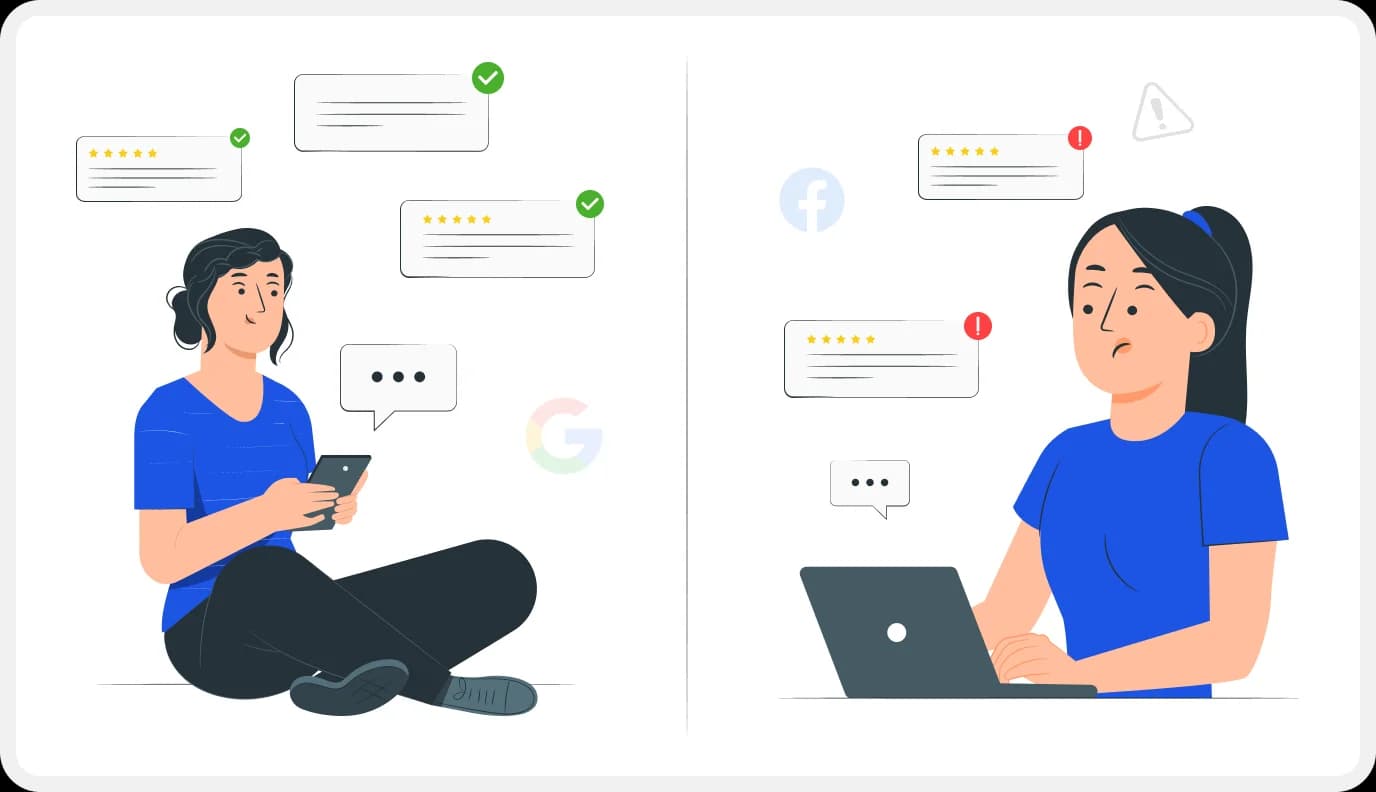
Why all the fuss? There’s a good reason! These platforms want reviews to be as real as possible to give new customers trustworthy information. If businesses could stuff their pages with reviews, half the web would be full of fake five-star fluff. Auto-posting reviews opens the door for spam, fake testimonials, or even bots.
Example: If a local cleaning company tried to plug customer compliments from emails into their Google profile. Two months later, Google might flag the activity, remove every review, and suspend their listing. Their leads would drop, all because they tried to skip the review policy.
Google and Facebook fight auto-posting because they want to protect “authenticity.” It’s about experiences, not just empty numbers.
Risks for Businesses
Let’s talk risks, because it’s not a small slap on the wrist. If you get caught, you could lose more than a couple of stars.
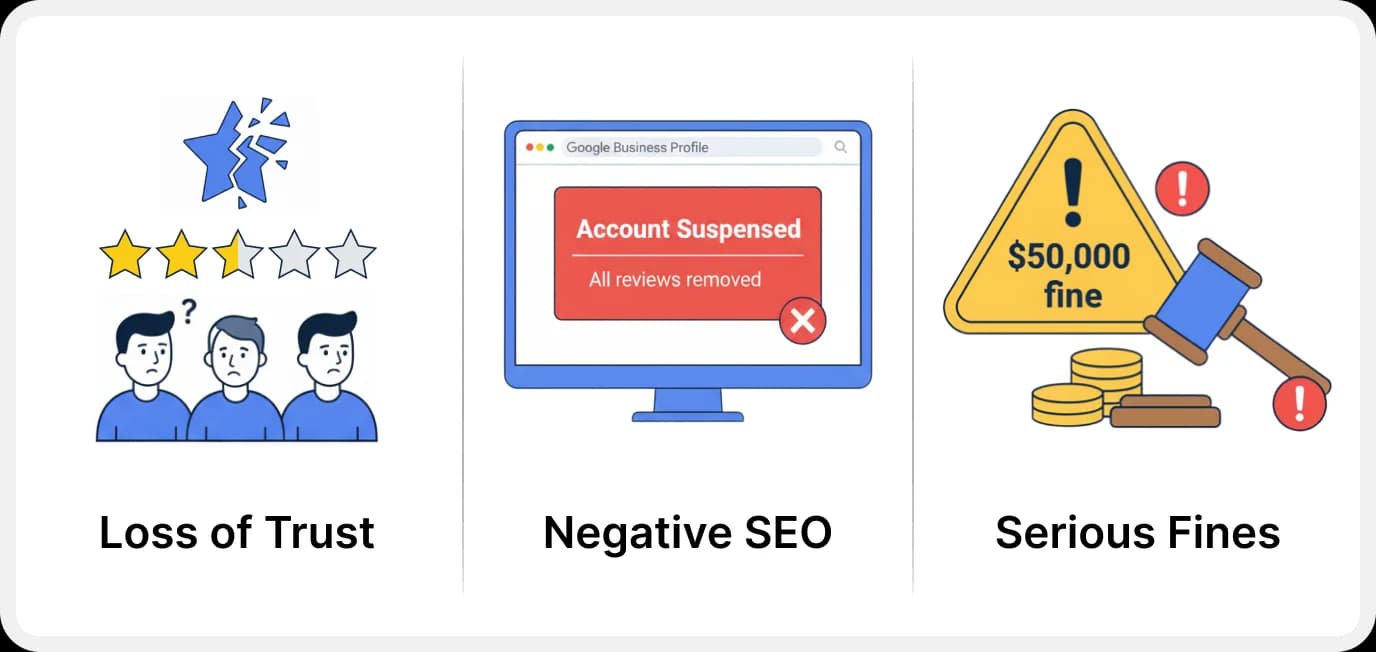
- Loss of Trust: If word gets out that you faked reviews or posted them without permission, people will definitely start doubting every rating they see on your page.
- Account Penalties: Both Google and Facebook are known to remove reviews in bulk. Sometimes, they suspend whole business listings or block you from collecting future reviews.
- Negative SEO: If Google feels your reviews are fake, your ranking will drop in search results, and less visibility will lead to fewer clicks.
- Serious Fines: The Federal Trade Commission can now fine businesses up to $50,000 for each fake review seen online. And that’s added with the reputation dent it would create forever.
Proper Way to Collect and Showcase Reviews
Now for the part that actually works. The best reviews always come straight from the customer. Here’s what to do:
Just Ask Directly
After a job well done, send your customer an official link to your Google or Facebook review page. Don’t write anything for them; just make it easy.
Use Platforms That Guide, Not Fake
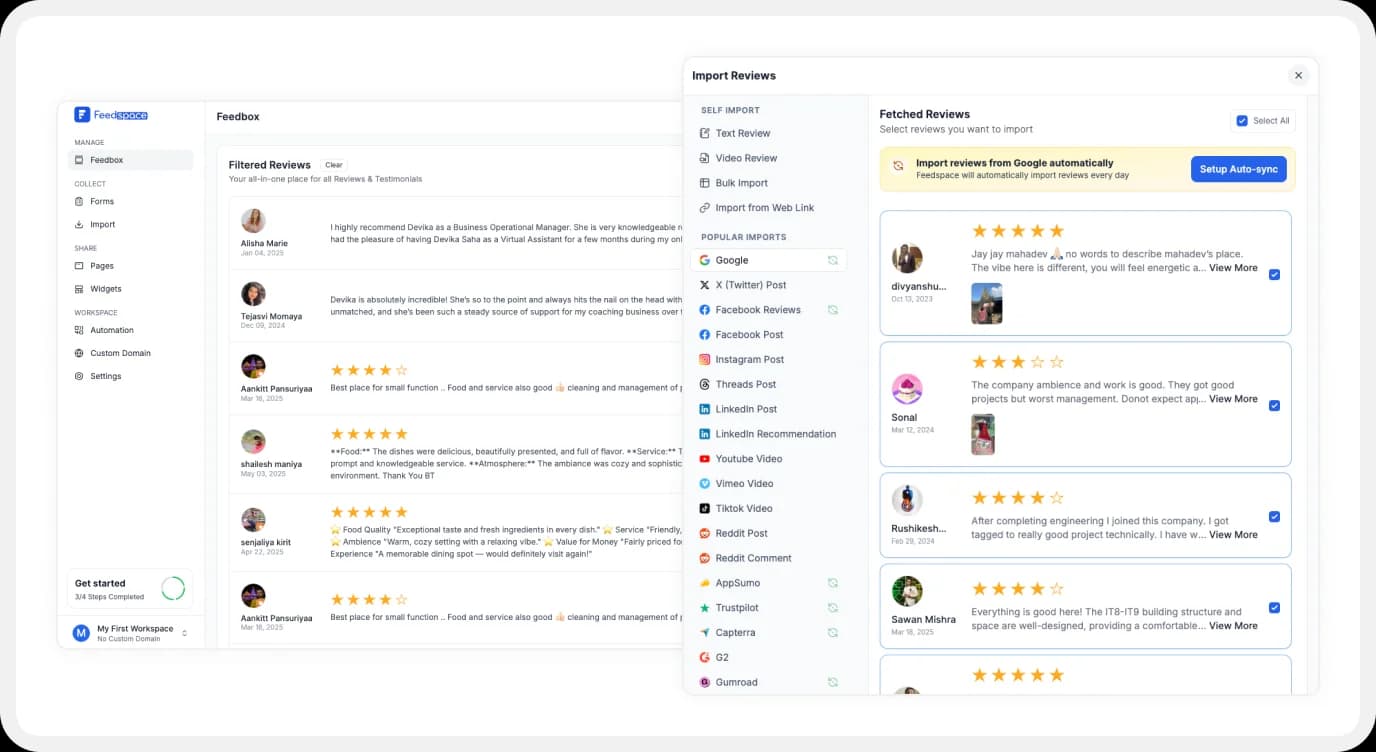
Review collection tools like Feedspace can help aggregate and market reviews smoothly, but they never “auto-post” the content for you. These platforms keep it all above board and help you manage your reputation without breaking any rules.
Showcase Reviews The Smart Way
Once reviews are posted by your customer, you are totally free to import them onto your website, share them on Instagram (tag the user if you can!), or even display a carousel of satisfied customer feedback on your homepage. Just never “re-post” them directly into Google or Facebook. That’s where most businesses get into trouble.
Example: A local gym gathers Google reviews from proud members, then features some of the best ones in a big “members’ wall” on their website, each quoted review links right back to the original. No rules broken!
Benefits of Following the Rules
Trust us, every inch of effort to do this in the right way will pay off in the long term.
Builds Social Proof That’s Real
Genuine reviews are worth way more than manufactured ones on any given day. People can easily tell when reviews are real, and that’s what actually brings in new business.
Boosts Trust & Engagement
When future customers see honest reviews, they are much more likely to engage, ask questions, and end up as your buyers
Avoids Headaches and Penalties
You won’t lose sleep over getting caught, losing your listing, or copping a big fine. Long-term trust saves your brand and can even help you stand out when others drop in rankings for cheating the system.
In conclusion
Auto-posting reviews is a strict NO for Google or Facebook. The platforms wants real human interaction, and the risks of bending the rules just aren’t worth it.
Stick with honest review collection. Make it easy for customers to share real stories and show them off with pride, just do it the right way. If you want to save time, review platforms like Feedspace keep things easy and ethical.
At the end of the day, genuine reviews mean better business and a lot less stress.
Want to build credibility the right way at ease? Try Feedspace today.